 Admin
Admin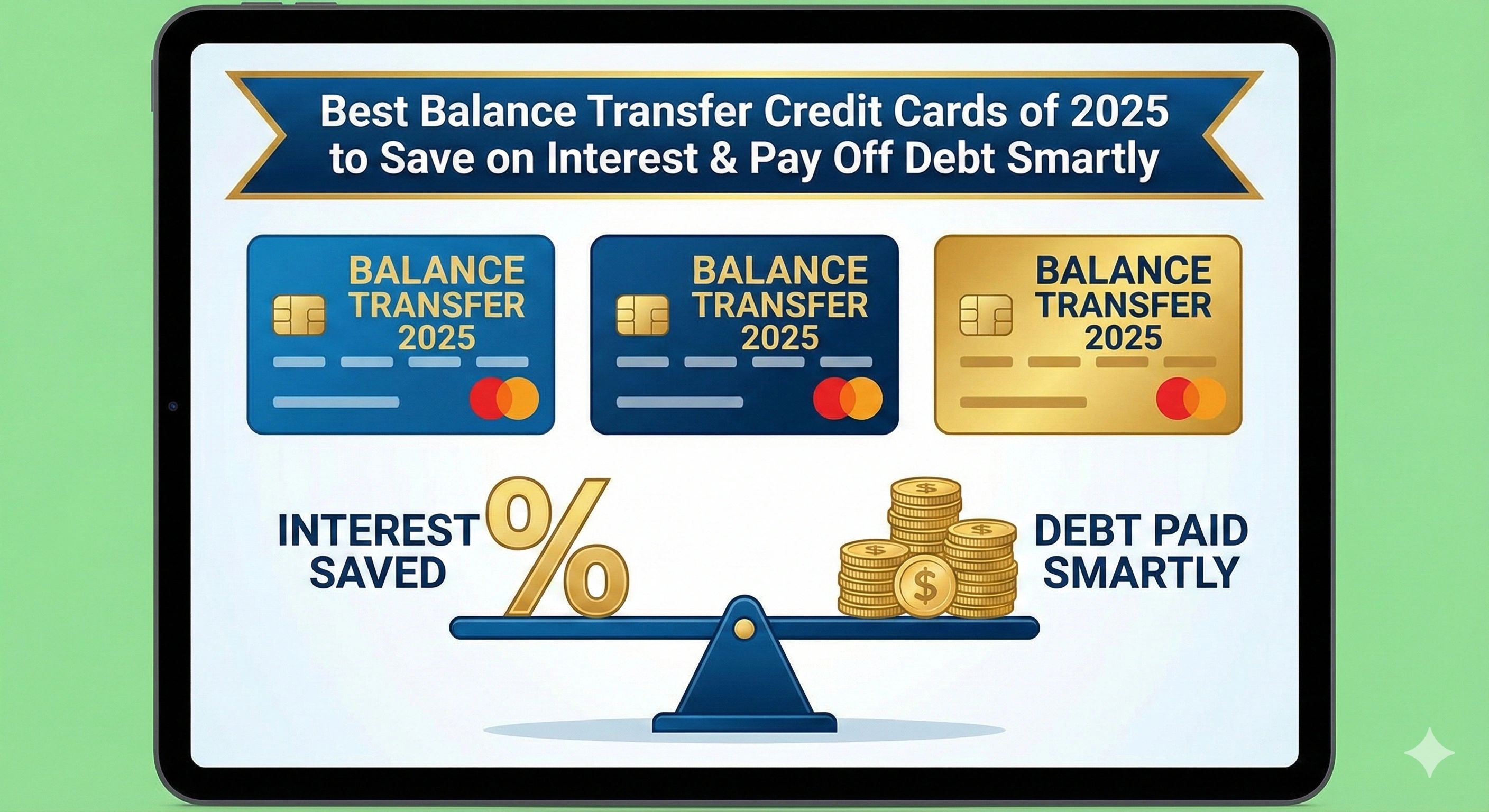
Best Balance Transfer Credit Cards of 2025 to Save on Interest & Pay Off Debt Smartly
If you’re carrying high-interest credit card debt, one of the smartest financial moves in 2025 is to grab a balance transfer credit card with a 0%-intro APR offer. A balance transfer moves debt from a high-interest card to a new card with a lower (often 0%) interest rate — giving you breathing room to pay down principal instead of interest. :contentReference[oaicite:0]{index=0}
✅ What Is a Balance Transfer Card — And Why Use One?
A balance transfer card lets you transfer outstanding balances (or sometimes personal/auto loans, depending on issuer) to the new card — typically with an introductory 0% APR or a very low rate for a set period. :contentReference[oaicite:1]{index=1}
Major benefits:
- Lower or zero interest — during the intro period, every payment goes toward principal. :contentReference[oaicite:2]{index=2}
- Debt consolidation: consolidate multiple high-interest cards into one manageable payment. :contentReference[oaicite:3]{index=3}
- Credit-utilization improvement: reduces utilization on old cards, may help credit score — though only if you avoid reusing them. :contentReference[oaicite:4]{index=4}
But balance transfers aren’t free. Expect:
- Balance-transfer fees: usually 3–5% of amount transferred. :contentReference[oaicite:5]{index=5}
- Temporary 0% offer: once expired, standard APR applies. :contentReference[oaicite:6]{index=6}
- Requirement to pay on time: missed payments can void the 0% deal. :contentReference[oaicite:7]{index=7}
🔎 How to Choose the Right Balance Transfer Card in 2025
When evaluating cards, focus on these criteria:
- Intro APR period length — longer is better (18 – 24 months or more).
- Balance transfer fee — lower fee reduces cost of transfer.
- Regular APR after promo — in case balance remains.
- Credit limit — must be enough to cover your total debt.
- Reputation, reliability & fees — avoid hidden fees or unfavorable terms.
- Flexibility & grace on new purchases — some cards apply promo only to transfers, purchases may carry high APRs. :contentReference[oaicite:8]{index=8}
📋 Our Picks: Top Balance Transfer Credit Cards of 2025
Based on the features above, here are some of the best balance transfer cards you can consider this year.
1. “Reflect 0% Balance Transfer Card” – Long 21-Month Intro
- 0% intro APR for balance transfers up to 21 months.
- Transfer fee: 3–5% depending on timing.
- No annual fee.
- Good for large debts if you commit to paying off within intro period.
2. “Citi Simplicity® / Citi Diamond Preferred®” – No Penalty, Generous Period
- 0% intro APR ~18–21 months on transfers.
- No late fees or penalty APR for first late payment (rare benefit). :contentReference[oaicite:9]{index=9}
- Good for borrowers needing flexibility and some leeway.
3. “Discover it® Balance Transfer” – Cashback + 0% Promo
- 0% transfer APR for 18 months.
- 3% transfer fee during promo (higher after 60 days in many cases). :contentReference[oaicite:10]{index=10}
- Cashback rewards, no annual fee — good for those who want new purchases too.
4. “Chase Slate / Slate Edge” – 0–15 Month Offers, Balanced Terms
- Typically offers a 0% APR for 15 months.
- Good reputation for customer service and timely payment processing.
- May have higher fee compared to others — great if your balance isn’t huge and you want predictability.
5. “BankAmericard / Bank of America Balance Transfer Card” – Balanced Fee vs Duration
- Often 0% for 18 months.
- Balance transfer fee and possible ongoing APR slightly higher than premium cards — still competitive for mid-size debts.
6. “Credit Union or Regional Bank Balance Transfer Cards” – Hidden Gems
Often overlooked — many credit unions offer 0% BT deals with low fees or special offers for existing members. If you belong to a credit union, this can be a very cost-effective alternative.
💡 Example: How Much You Could Save with a Balance Transfer
Suppose you have $5,000 on a high-interest card with 24% APR, paying $200/month — you’ll pay more than $7,000 over 36 months.
If you move that balance to a 0% BT card (with a 3% transfer fee = $150) and pay $200/month, you’ll clear debt in ~26 months, costing roughly $5,300 total — a saving of $1,700+ vs original! :contentReference[oaicite:11]{index=11}
⚠️ Common Mistakes & Pitfalls to Avoid
Failing to Pay Off Before Promo Ends
If you don’t finish repayment before introductory APR ends, any remaining balance accrues interest at a much higher rate. :contentReference[oaicite:12]{index=12}
Ignoring Balance Transfer Fees
At 3–5%, fees add up — make sure savings from lower interest exceed the fee. :contentReference[oaicite:13]{index=13}
Using the Old Card Again Immediately
Transferring balances only to accumulate new charges on old cards defeats the purpose. Always keep old cards closed or locked. :contentReference[oaicite:14]{index=14}
Not Checking Credit Limit Before Transfer
Many BT cards cap transfers to a percentage of the credit limit. If the limit is too low, you may have to stagger transfers — adding complexity. :contentReference[oaicite:15]{index=15}
Applying Without Checking Eligibility
Good-to-excellent credit (often 660–680 FICO score or equivalent) is commonly required. Applications with poor credit can be rejected or come with unfavorable terms. :contentReference[oaicite:16]{index=16}
📌 Tips to Maximize Benefits of a Balance Transfer
- Calculate total cost: fee + expected payments vs your current interest burden
- Pay more than minimum — aim to clear balance within intro period
- Don’t close old cards right away — older credit history helps your score temporarily
- Avoid new purchases on BT card until balance is cleared
- Set up autopay to avoid late payments
- Check for prepayment penalties or fine print
Is a Balance Transfer Card Right for You?
Balance transfer cards are best for:
- People carrying high-interest credit card debt
- Those who can commit to disciplined monthly repayment
- People with good credit history and stable income
- Those wanting to avoid personal loans or payday loans
If you frequently carry balances, make large purchases, or struggle with discipline — a BT card might not solve the root issue.
Conclusion: Use Balance Transfer Cards Wisely in 2025
In 2025’s volatile economy, interest rates remain unpredictable. A well-chosen balance transfer credit card can save you a substantial amount in interest, help you consolidate debts, and set you on a path to financial freedom. But only if used with discipline.
Before you apply — review your total debt, choose a card with a long 0% intro period and low transfer fee, set a realistic payoff plan, and avoid accumulating new debt. If you follow these rules, a balance transfer card can be one of the smartest financial tools in your wallet.

 Admin
Admin